
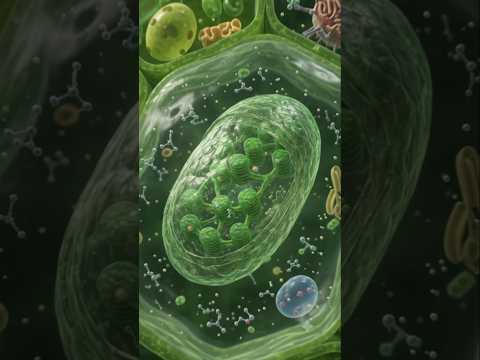
Understanding cellular biology can often feel like trying to decipher an invisible world. Among the most crucial biological processes on Earth is photosynthesis, specifically the light-independent reactions known as the Calvin Cycle (or C₃ Cycle). While traditional textbooks rely on static diagrams, modern educational tools leveraging high-definition 3D graphics make complex biochemical pathways remarkably easy to comprehend.
What is the Calvin Cycle?
The Calvin Cycle is the second stage of photosynthesis, where plants convert carbon dioxide taken from the air into glucose—the sugar that fuels plant growth. Unlike the light-dependent reactions that require direct sunlight, the Calvin Cycle takes place inside the fluid-filled space of the chloroplast known as the stroma. It functions as a continuous chemical loop to synthesize vital organic compounds.
The Three Core Stages of the C₃ Cycle
To truly grasp how plants turn atmospheric gas into organic energy, it helps to break the cycle down into three distinct phases:
- Carbon Fixation: The enzyme RuBisCO facilitates the attachment of carbon dioxide (CO₂) to a five-carbon molecule called RuBP. This forms an unstable six-carbon compound that quickly splits into two molecules of 3-PGA.
- Reduction: ATP and NADPH (generated during light-dependent reactions) donate energy and electrons to convert 3-PGA into G3P, a high-energy three-carbon sugar. A portion of this G3P exits the cycle to build glucose and other carbohydrates.
- Regeneration of RuBP: The remaining G3P molecules undergo a series of complex chemical rearrangements powered by ATP to regenerate RuBP, preparing the chloroplast to accept new carbon dioxide molecules.
Why Visualizing Biology Matters
Observing molecular interactions on a microscopic level can be challenging with text alone. Utilizing realistic 3D graphics allows students, educators, and science enthusiasts to observe how enzymes and molecules physically bend, bond, and transform in real time.
By stepping inside the chloroplast through dynamic 3D graphics, abstract biological concepts become clear and memorable. Whether you are preparing for a biology exam or simply curious about how plant life sustains our atmosphere, visual step-by-step breakdowns bridge the gap between complex chemical formulas and intuitive learning.
