

Sunday, October 18, 2026
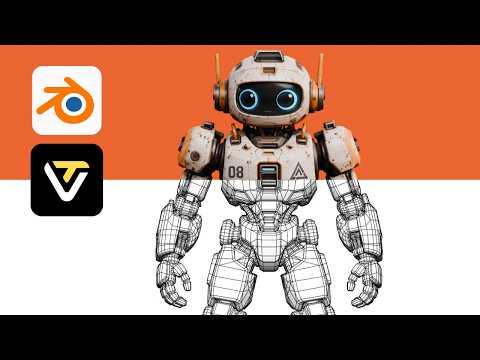
Artificial intelligence is rapidly shifting paradigms across creative industries, and 3D graphics is no exception. Among the latest tools making waves in the CG community is Tripo AI, a platform promising to generate 3D models and materials in seconds. But can it genuinely benefit professional 3D artists, or is it just another overhyped gimmick?
What is Tripo AI?
Tripo AI leverages advanced machine learning models to convert simple text prompts or 2D images into fully realized 3D assets. Instead of spending hours sculpting base meshes or manually unwrapping UVs for basic props, creators can generate rapid prototypes within moments. For concept artists and game developers who need quick placeholder assets, this speed is a massive advantage.
Streamlining Workflow and Material Detail
One of the biggest bottlenecks in 3D production is surface detailing and material assignment. Tripo AI doesn’t just stop at generating geometry—it attempts to automatically apply surface colors and materials. While traditional workflows require tedious setup, AI-driven generation helps artists rapidly visualize how a 3D texture will wrap around complex geometry.
By utilizing these AI tools during the initial phase of a project, artists can experiment with multiple aesthetic directions without committing hours to manual painting. While high-end film production still demands hand-crafted material maps, Tripo AI provides a surprisingly robust foundation. Integrating an AI-generated 3D texture into your pipeline allows you to skip repetitive setup tasks and focus on fine-tuning artistic details.
Can Tripo AI Replace 3D Artists?
The short answer is no—at least, not anytime soon. Tripo AI excels at speed and ideation, but complex topology, clean edge loops, and production-ready rigging still require human intervention. Instead of viewing AI as a replacement, smart artists are adopting Tripo AI as a powerful assistant to speed up asset blocking, background object creation, and surface ideation.
The Verdict
Tripo AI is a formidable addition to the modern digital artist's toolkit. By handling initial asset drafting and speeding up preliminary 3D texture generation, it frees up valuable time for artists to focus on high-value creative control and polished execution.


