Cad 3D Category

Showing posts with label Industrial Automation. Show all posts

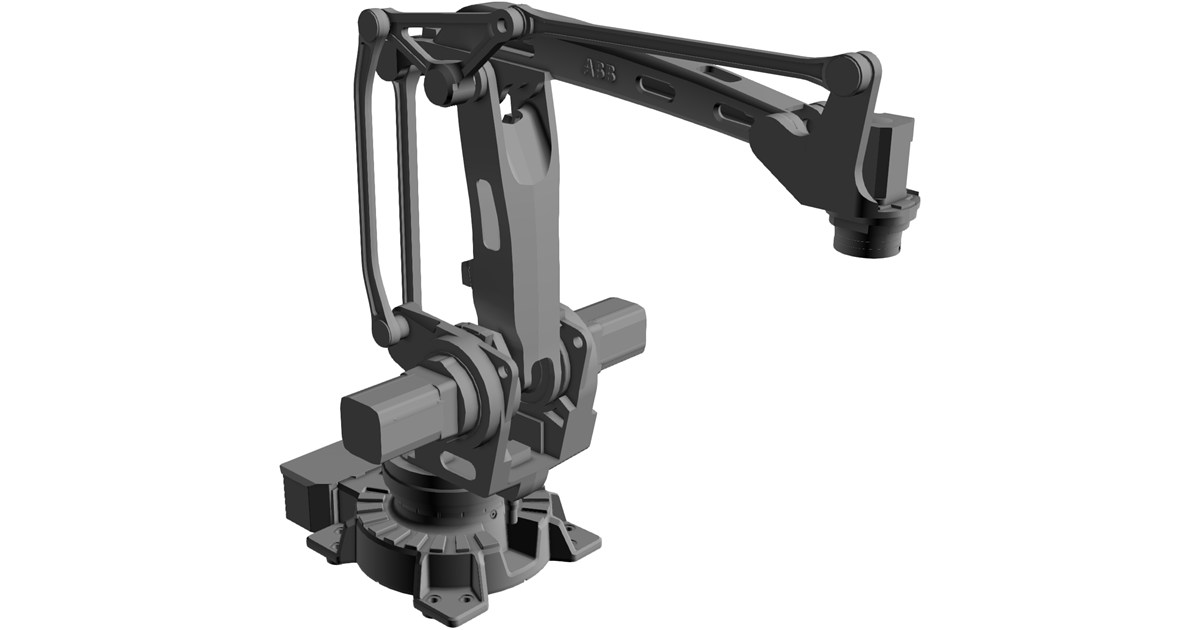
Download ABB IRB 460 3D CAD Model | Compact Palletizing Robot

Friday, September 11, 2026

Preview Image

Integrate high-speed automation into your engineering projects with the ABB IRB 460 3D CAD Model. Renowned as one of the world's fastest 4-axis compact palletizing industrial robots, the IRB 460 is widely used in packaging, material handling, and end-of-line industrial automation systems.

Key Features & Specifications:

  • Multi-CAD Compatibility: Available in neutral and native CAD formats suitable for SolidWorks, Autodesk Inventor, CATIA, PTC Creo, Siemens NX, AutoCAD, Pro/ENGINEER, and ACIS (.SAT).
  • Precision Modeling: Highly detailed geometry perfect for robotic cell layout design, reachability analysis, collision detection, and digital twin simulations.
  • Application Utility: Essential asset for automation system integrators, mechanical design engineers, and industrial process planners.

Streamline your robotic cell modeling and reduce design cycle times by incorporating this 3D CAD asset directly into your engineering workspace.


Continue Reading | ความคิดเห็น

ABB IRB 2600ID-8/2.00 Industrial Robot 3D CAD Model Free Download

Preview Image

Enhance your automated cell design and simulation workflows with the official 3D CAD model of the ABB IRB 2600ID-8/2.00 industrial robot arm. Featuring Integrated Dressing (ID) technology, this highly versatile 6-axis manipulator is engineered for high-precision applications including arc welding, material handling, and machine tending.

Key Technical Specifications:

  • Payload Capacity: 8 kg
  • Reach: 2.00 meters
  • Axis Count: 6-axis articulated manipulator
  • Design Advantage: Integrated hose package inside the upper arm and wrist for extended process cable life and compact footprint footprint clearance.

Supported CAD Software Formats:

This 3D model is compatible with all major parametric and direct modeling software platforms, including:

  • SolidWorks (.SLDPRT, .SLDASM)
  • AutoCAD (.DWG, .DXF)
  • Autodesk Inventor (.IPT, .IAM)
  • PTC Creo / Pro/ENGINEER (.PRT, .ASM)
  • Siemens NX & Solid Edge
  • CATIA V5/V6
  • Universal Formats: STEP (.stp), IGES (.igs), ACIS (.sat)

Download this accurate CAD file to streamline your robotic system integration, collision detection, and plant layout simulation today.


Continue Reading | ความคิดเห็น

ABB IRB 120 Industrial Robot Arm 3D CAD Model

Preview Image

Download a high-precision 3D CAD model of the ABB IRB 120, ABB’s smallest 6-axis industrial robot arm designed for flexible, compact, and high-speed material handling and assembly applications.

Key Model Features & Specifications:

  • Payload Capacity: 3 kg (4 kg for vertical wrist orientation)
  • Reach: 580 mm maximum reach radius
  • Axis Count: 6-axis articulated robot arm
  • Application Suitability: Automation workcell design, collision detection, reachability analysis, and spatial planning.

Supported CAD Formats:

This 3D model is compatible with major engineering and CAD software packages, including:

  • SolidWorks (.sldprt, .sldasm)
  • Autodesk Inventor (.ipt, .iam)
  • CATIA V5 / V6
  • PTC Creo / Pro/ENGINEER
  • Siemens NX
  • AutoCAD & Universal Formats (STEP, IGES, ACIS, SAT)

Ideal for mechanical design engineers, robotics integrators, and automation designers building industrial simulation environments.


Continue Reading | ความคิดเห็น

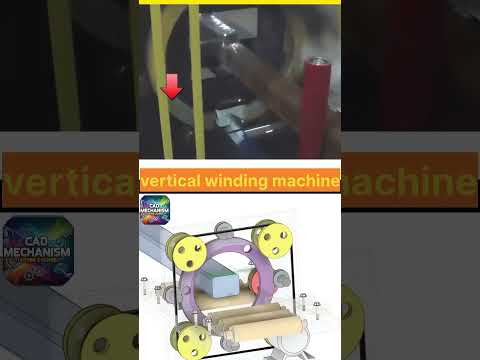
How Vertical Orbital Wrapping Machines Work: A Deep Dive into 3D CAD Engineering

Thursday, September 3, 2026

In the world of modern packaging and industrial automation, vertical orbital wrapping machines play a vital role in securing products for safe transport. From long aluminum extrusions to bulky wooden panels, these mechanical systems wrap items quickly, tightly, and consistently. But have you ever wondered about the intricate mechanical movements operating beneath the surface?

By analyzing detailed 3D CAD models, we can unlock the fascinating engineering principles that make these machines so extraordinarily efficient.

Understanding the Vertical Orbital Wrapping Mechanism

A vertical orbital wrapping machine—often referred to as a ring wrapper—functions by rotating a roll of stretch film around a product as it moves horizontally through a central ring. Unlike traditional pallet wrappers, the product remains steady on a conveyor belt while the wrapping ring spins vertically around it.

This high-speed orbital rotation requires precise mechanical timing, durable bearing assemblies, and continuous tension control to ensure smooth film application without tearing or bunching.

Visualizing Mechanics Through 3D CAD

Understanding complex mechanical interactions can be difficult through 2D drawings alone. Utilizing advanced 3D CAD animations allows engineers, designers, and students to observe internal mechanics in real-time.

Through dynamic 3D modeling, you can clearly see: - Drive Systems: How rotational force is transferred from the drive motor directly to the large orbital ring. - Film Dispenser Dynamics: How pre-stretch carriage rollers optimize material usage while maintaining proper film tension. - Conveyor Synchronization: How linear product feeding aligns seamlessly with the ring's RPM for optimal wrapping coverage.

Furthermore, leveraging 3D CAD technology during the design phase enables mechanical engineers to perform motion studies, detect physical interference, and optimize components long before physical manufacturing begins.

The Value of Orbital Wrapping in Industrial Automation

Vertical orbital wrapping delivers exceptional protection against dust, moisture, and load shifting during transit. By automating this packaging stage, industrial facilities significantly boost throughput, reduce manual labor, and minimize material waste.

Whether you are a mechanical engineering enthusiast studying kinematic design or an industrial professional seeking modern packaging solutions, exploring these machines through accurate visual models offers deep insight into modern industrial automation.

3D CAD
Continue Reading | ความคิดเห็น

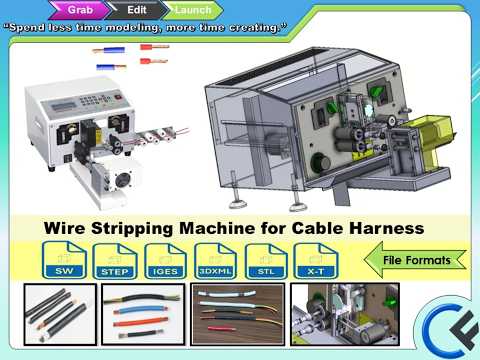
Revolutionizing Wire Processing: How 3D CAD Models Optimize High-Speed Cable Machines

Wednesday, August 26, 2026

In the fast-paced world of industrial automation, efficiency and accuracy are paramount to producing reliable wire harnesses. Automated cable processing machines have become indispensable assets for high-volume manufacturing environments. To achieve seamless operation and pinpoint accuracy, modern machinery relies heavily on advanced engineering design. Utilizing a robust 3D CAD framework allows engineers to visualize every gear, blade, and pneumatic actuator long before physical assembly begins.

Precision Engineering for High-Speed Cable Processing

The SC-0006 wire stripping machine is engineered specifically to handle demanding cable processing workflows. Designed for maximum throughput, it streamlines operations by executing precise strip lengths, handling diverse wire gauges, and preparing conductors for immediate harness assembly.

High-speed wire processing requires absolute mechanical alignment. Minor miscalculations in blade positioning or feeding mechanisms can lead to damaged strands, inconsistent strip lengths, or costly machine downtime. Through comprehensive computer-aided modeling, every structural element is stress-tested and optimized to maintain tight tolerances during continuous, high-speed operation.

Streamlining Harness Assembly Workflows

Integrating custom automation equipment into an existing factory layout can present significant spatial and mechanical challenges. By integrating a digital 3D CAD model into the production workflow, plant engineers can simulate how the wire stripping machine interacts with upstream wire feeders and downstream crimping or bundling stations.

This digital twin approach enables engineering teams to: - Verify spatial requirements and footprint constraints prior to installation. - Plan electrical and pneumatic routing with complete clarity. - Reduce physical prototyping cycles, cutting development costs and time-to-market. - Ensure seamless integration with robotic arms and custom assembly fixtures.

Driving Efficiency in Modern Industrial Design

As demand for complex harness assemblies grows across the automotive, aerospace, and consumer electronics sectors, speed and quality must go hand in hand. Equipment designed with high precision ensures consistent repeatability across millions of operating cycles.

Whether you are designing a full automation line or upgrading specific equipment, leveraging pre-built 3D CAD assets minimizes engineering overhead and prevents costly redesigns on the factory floor. Investing in well-engineered wire processing solutions lays a solid foundation for smarter, faster, and more efficient manufacturing.

3D CAD
Continue Reading | ความคิดเห็น

Popular Posts Today

 
Support : 3Dcadbrowser | Grabcad | 3Dcontentcentral | D | E | F | G
Copyright © 2028. Engineering 3DCad Appication - All Rights Reserved