
Cad 3D Category

Showing posts with label 3D Engineering. Show all posts

Unlocking the Secrets of 180 MPH Wind Turbines Through 3D Engineering

Thursday, November 12, 2026
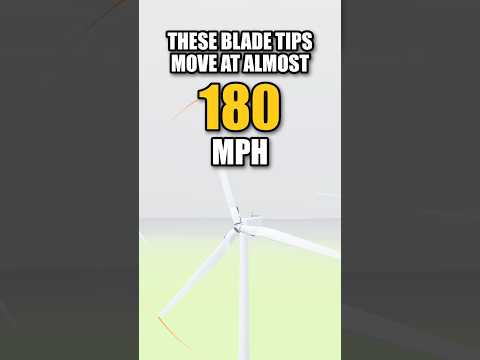
Have you ever looked at a massive wind turbine and thought it was moving in slow motion? It might look like a gentle giant lazily spinning against the skyline, but looks can be deceiving. While the central rotor turns only about 12 times per minute, the outer tips of those giant 200-foot blades are actually slicing through the air at nearly 180 mph!

Understanding how these clean-energy behemoths operate requires a deep dive into modern mechanical design. Through advanced 3D engineering, researchers and designers can now visualize and optimize the complex physics that make this incredible mechanical balance possible.

The Mind-Boggling Physics of Blade Velocity

How can a turbine rotor spin so slowly while its tips move faster than a racing car? It all comes down to rotational mechanics and geometric scale.

Because each blade stretches over 200 feet from the center hub, the outer tip must cover a vastly larger circumference than the inner shaft during a single turn. At just 12 revolutions per minute (RPM), that immense distance forces the blade tips to travel at extreme speeds near 180 mph.

Managing the structural stress caused by these high velocity tips is a major challenge. Blades are crafted from specialized composite materials designed to flex without breaking, enduring heavy aerodynamic loads and extreme weather conditions for decades.

How 3D Engineering Drives Turbine Innovation

Building a machine capable of converting natural wind into stable electrical energy requires extreme precision. Today, sophisticated 3D engineering tools allow mechanical engineers to model fluid dynamics, stress distribution, and internal blade geometry long before physical manufacturing begins.

Inside the housing at the top of the tower (the nacelle), a specialized gearbox converts the slow, high-torque rotation of the main shaft into the rapid rotation needed by the generator. Utilizing 3D engineering simulations, developers can fine-tune gear ratios and automatic pitch control systems—which subtly adjust the angle of the blades to catch optimal wind levels while preventing catastrophic failure during storms.

The Future of Wind Power

As the global demand for sustainable energy grows, wind turbines are becoming bigger, quieter, and more efficient. By combining cutting-edge physics with advanced digital design, engineers are constantly pushing the limits of renewable power—one 180 mph blade tip at a time.

Continue Reading | ความคิดเห็น

Mastering Filament Storage: Essential Tips for 3D Engineering Success

Friday, October 30, 2026

If you want consistent, high-quality prints, knowing how to properly store your 3D printer filament is just as important as mastering your machine's settings. In the fast-evolving world of 3D engineering, high-precision output requires pristine raw materials. Exposed filament absorbs moisture from the surrounding air, leading to poor layer adhesion, stringing, nozzle clogs, and brittle final parts.

Why Moisture Control Matters

Most standard 3D printing filaments—such as PLA, ABS, PETG, and especially Nylon—are hygroscopic. This means they actively draw water molecules from ambient air. When damp filament hits the hot end, trapped water turns to steam, causing crackling sounds, bubbling, uneven extrusion, and weak structural performance. In demanding 3D engineering workflows, these material defects can completely compromise functional prototypes and end-use components.

Effective Methods for Storing Your Filament

To protect your materials and ensure reliable print quality, consider integrating these practical storage solutions into your workspace:

  1. Vacuum Bags with Desiccant Packs: This is one of the most cost-effective methods. Storing spools in airtight vacuum bags with silica gel packets actively removes residual moisture and keeps humidity at bay.
  2. Airtight Storage Bins: Heavy-duty plastic containers fitted with rubber gaskets create a controlled, moisture-proof environment for multiple spools. Place a rechargeable desiccant or a digital hygrometer inside to monitor internal humidity levels easily.
  3. Active Filament Dry Boxes: For advanced materials, active filament dry dryers heat the spool before and during the printing process. This ensures continuous moisture removal during critical, multi-hour prints.

Elevate Your Printing Quality

Taking control of your material storage is an easy yet powerful step toward optimizing your overall 3D engineering capabilities. By protecting your spools from environmental humidity, you will reduce failed prints, save money on wasted plastic, and achieve flawless, professional-grade results every time you press print.

Continue Reading | ความคิดเห็น

Beneath the Surface: How 3D Engineering Reveals the Secrets of Bridge Foundations

Thursday, October 8, 2026

Have you ever stood atop a massive bridge and wondered how it effortlessly supports thousands of tons of traffic while resisting raging river currents? While soaring arches and steel cables capture our imagination, the true marvel of bridge design lies hidden deep underwater and underground.

Understanding how these giant structures stay upright against unrelenting natural forces requires looking beneath the surface—where modern structural analysis plays a crucial role.

The Hidden Challenge Beneath the Waves

Bridge foundations face an extraordinary combination of dynamic loads. In addition to carrying the static weight of the bridge itself and the constant impact of moving vehicles, underwater foundations must endure intense hydrostatic pressure, shifting soil, and scour—the erosion of riverbed sediment around support piers.

To ensure safety, civil engineers design deep foundation systems such as driven piles, drilled shafts, and submerged caissons. These structures transfer heavy loads down through weak upper soil layers directly into solid bedrock.

Simulating Complex Forces with 3D Engineering

In traditional civil design, engineers relied heavily on two-dimensional blueprints and manual structural calculations. Today, advanced 3D engineering software revolutionizes how foundation systems are evaluated. Through three-dimensional modeling and Finite Element Analysis (FEA), engineers can visualize stress distributions, fluid dynamics, and soil-structure interactions in real time.

By integrating 3D engineering tools into the design phase, engineering teams can simulate extreme scenario loads—such as severe flooding or seismic events—long before construction begins. This allows for precise optimization of foundation depth, material thickness, and structural reinforcement, drastically reducing safety risks and project costs.

Building Safer Infrastructure for Tomorrow

As infrastructure demands grow and environmental conditions become increasingly unpredictable, accurate structural modeling is essential. Leveraging state-of-the-art 3D engineering empowers engineers to build resilient, long-lasting bridges capable of standing strong for generations.

The next time you cross a massive bridge, remember that the most impressive feat of engineering is the invisible foundation holding it all together.

Continue Reading | ความคิดเห็น

Popular Posts Today

 
Support : 3Dcadbrowser | Grabcad | 3Dcontentcentral | D | E | F | G
Copyright © 2028. Engineering 3DCad Appication - All Rights Reserved