
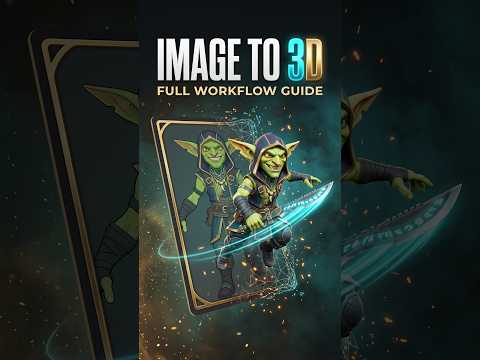
The landscape of digital art and game development is undergoing a massive transformation. What once required skilled artists days—or even weeks—to model, texture, and rig can now be accomplished in a matter of seconds. Thanks to recent breakthroughs in artificial intelligence, transforming a simple 2D concept sketch into a fully functional 3D character is now a seamless, automated reality.
The Power of Gemini 4 Neon and Magnific MCP
At the forefront of this technological leap is the powerful combination of Google’s Gemini 4 Neon model and Magnific MCP. By feeding a basic two-dimensional illustration into this advanced AI pipeline, creators can automatically generate complex geometry and high-resolution textures.
Instead of spending countless hours on manual retopology and texture mapping, these generative tools analyze the lighting, shape, and depth of the initial drawing. The AI then synthesizes these details into a structured digital asset, drastically reducing production time while preserving artistic vision.
Real-Time Browser Performance at 60 FPS
What makes this pipeline truly groundbreaking is not just the aesthetic quality of the generated models, but their immediate real-time utility. In a recent tech demonstration, a rough sketch of a fantasy goblin was converted into an interactive asset running live inside a standard web browser.
Rendering a playable 3D character live at 60 frames per second proves that AI models are no longer producing static, unusable meshes. Instead, they are delivering lightweight, engine-ready assets suitable for web applications, rapid prototyping, and interactive media without requiring extensive manual optimization.
A New Era for Game Developers and Artists
For indie developers, concept artists, and digital creators, this workflow significantly lowers the barrier to entry. Prototyping allows teams to test character concepts directly in playtests before committing heavy resources to full production cycles.
As generative AI tools continue to mature, bringing your creative vision to life as an interactive 3D character has never been more accessible or efficient. The future of real-time 3D creation is fast, dynamic, and driven by smart technology.
