
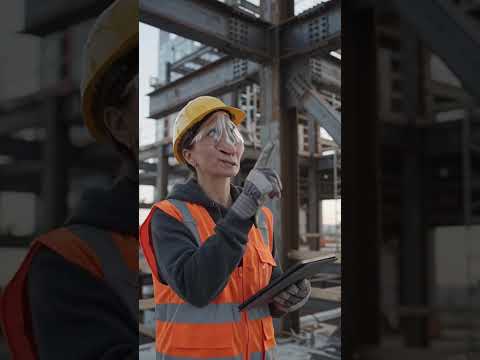
Standing hundreds of feet above the ground on a high-rise construction site is not for the faint of heart. For structural engineers, it is where months—or even years—of meticulous planning face their ultimate test. Before a brand-new skyscraper can open its doors to the public, it must undergo a comprehensive final safety review. Today, the integration of advanced 3D engineering is completely transforming how these critical inspections are conducted, bringing unprecedented precision to modern architecture.
Critical Safety Reviews: Behind the Scenes
During a final inspection, a structural engineer conducts a rigorous walk-through of the skyscraper. Every single detail—from load-bearing columns and heavy steel girders to foundation integrity—must be thoroughly examined to guarantee absolute safety and stability.
Historically, engineers had to rely on stacks of flat 2D blueprints to double-check complex structural connections. Today, field engineers can cross-reference physical builds directly against digital models. By leveraging modern 3D engineering workflows, professionals can visualize complex spatial relationships, detect potential structural clashes, and verify load distributions before even stepping onto the job site. This ensures that the final physical inspection serves as a seamless validation of a pre-tested, highly accurate digital design.
Ensuring Long-Term Integrity and Safety
A high-rise safety review is far more than just checking off a compliance box; it is about guaranteeing long-term resilience against natural forces like high winds and seismic activity. By combining real-world site inspections with sophisticated 3D engineering tools, structural engineers can spot minor structural discrepancies that might otherwise go unnoticed.
This powerful blend of boots-on-the-ground expertise and cutting-edge spatial modeling ensures that every skyscraper is built to stand tall and secure for decades to come. As urban skylines continue to grow taller and more complex, these advanced digital methodologies will remain the backbone of modern structural safety.
