
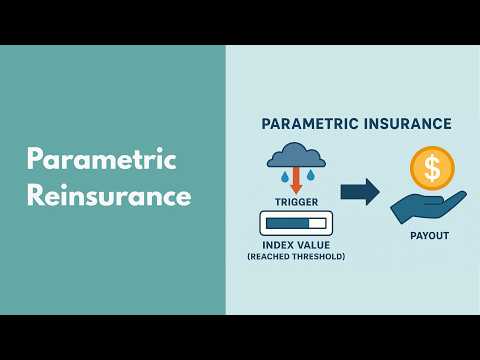
In an era of increasing climate volatility, the speed of financial recovery is often as critical as the recovery itself. Traditional reinsurance has long relied on the "indemnity" model—a process where payouts are determined by the actual physical loss incurred. While effective, this model is often plagued by lengthy damage assessments and complex claim adjustments that can delay vital funds for months.
Enter a faster, more transparent alternative. The rise of parametric insurance has shifted the landscape of disaster finance by focusing on objective triggers rather than subjective loss assessments.
How Index-Based Triggers Work
Unlike traditional policies, a parametric solution pays out based on the occurrence of a specific event that meets a predefined threshold. For example, a policy might be triggered if a hurricane reaches Category 4 status within a specific geographic coordinate, or if an earthquake exceeds a 7.0 magnitude.
Because the payout is tied to an independent data index—such as wind speed or seismic intensity—there is no need for a claims adjuster to visit the site to calculate physical damage. This "if-then" logic ensures that funds are released almost immediately after the event is verified by a third-party data source.
Bridging the Protection Gap with Cat Bonds
One of the most revolutionary applications of this technology is found in Catastrophe Bonds (Cat Bonds). These financial instruments allow insurers to transfer risk directly to capital market investors. By using these structures, organizations can secure large-scale funding that remains liquid and ready to deploy. This mechanism provides a vital safety net for governments and large enterprises, ensuring that essential services and reconstruction efforts can begin without the usual bureaucratic hurdles of traditional insurance.
The Advantage of Speed and Certainty
The primary benefit of this model is liquidity. In the wake of a natural disaster, immediate cash flow can be the difference between a quick recovery and long-term economic stagnation. By removing the uncertainty of the claims process, parametric reinsurance provides a level of financial predictability that traditional models simply cannot match. As we face a future with more frequent extreme weather events, these innovative financial tools are becoming a cornerstone of global resilience and disaster preparedness.
