
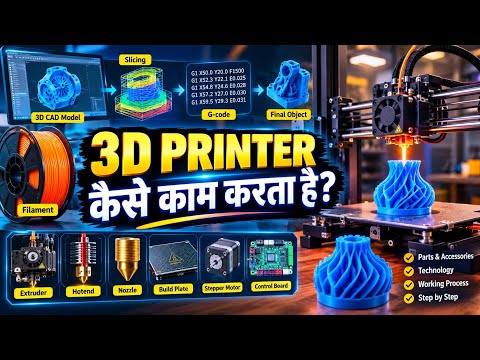
Have you ever wondered how a digital file on your computer screen transforms into a solid, physical object you can hold in your hand? This is the magic of 3D printing. Formally known as additive manufacturing, this technology is revolutionizing everything from medical prosthetics to aerospace engineering. Let’s break down the fascinating process of how these machines work.
The Foundation: The Digital Blueprint
Every 3D-printed object begins its journey in the digital realm. To create a physical item, you first need a precise digital blueprint. This is where 3D CAD (Computer-Aided Design) software comes into play. Designers and engineers use these tools to create a detailed three-dimensional map of the object. This 3D CAD model serves as the essential set of instructions that tells the printer exactly what to build, ensuring every measurement is accurate to the millimeter.
From Design to Slices
Once the digital model is finalized, it cannot be sent directly to the printer just yet. It must first pass through a "Slicer." Slicing software takes the complex geometry of the model and cuts it into hundreds or thousands of thin, horizontal layers. It then generates "G-code," a specialized language that tells the printer’s motor where to move, how fast to go, and how much material to release.
The Printing Process: Building Layer by Layer
While traditional manufacturing often involves "subtractive" methods—like carving a statue out of a block of stone—3D printing is "additive." It builds objects by adding material one layer at a time.
The most common method for hobbyists is Fused Deposition Modeling (FDM). In this process, a plastic filament is fed into a heated nozzle called an extruder. The nozzle melts the plastic and moves with incredible precision, depositing a thin layer onto the build plate. Once a layer is finished, it cools and solidifies almost instantly, and the machine moves up to begin the next layer. This repetitive process continues until the entire object is completed.
Why It’s a Game Changer
The integration of 3D CAD technology with 3D printing allows for rapid prototyping. In the past, creating a prototype could take weeks and cost thousands of dollars in molds. Today, a designer can tweak a digital file and have a physical version ready in hours. Whether it’s creating custom jewelry or complex engine parts, 3D printing is limited only by the imagination of the designer.
