
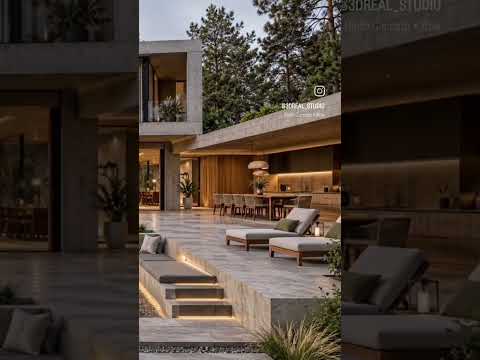
Transforming a simple blocky mesh into a breathtaking, life-like architectural masterpiece is one of the most rewarding journeys in modern digital design. What starts as a monochrome "clay render" can quickly evolve into a sun-drenched, photorealistic dream home through a strategic production pipeline. If you want to elevate your architectural presentations, mastering the complete 3D visualization workflow is the ultimate game-changer.
In this breakdown, we walk through the step-by-step transformation of a modern luxury villa from a raw 3D model to a final photorealistic render.
Step 1: Establishing the Foundation with Clay Renders
Every great render begins with solid geometry. The clay render stage focuses purely on proportions, composition, and architectural form without the distraction of colors or complex textures. By keeping materials uniform, artists can test camera angles, refine scale, and ensure the structural design feels visually balanced and grounded.
Step 2: Applying Realistic Materials and Lighting
Once the structural blockout is finalized, the true magic begins. Applying high-resolution PBR (Physically Based Rendering) materials—such as textured concrete, warm timber, and reflective glass—gives the building realistic tactile qualities. Lighting is equally critical. Utilizing natural daylighting setups with HDRI environments allows realistic shadows to fall naturally across the facade.
To complete the environment, adding contextual elements like realistic foliage, surrounding trees, and ambient outdoor decor transforms a solitary structure into an inviting, lived-in space.
Step 3: Fine-Tuning with Post-Processing
The final phase bridges the gap between a standard computer render and a magazine-worthy photograph. Through strategic color grading, contrast adjustment, and subtle atmospheric tweaks, post-production enhances the depth of the image. Fine-tuning the highlights and shadow balance brings out delicate details in the glass reflections and architectural finishes.
Elevate Your Design Process
Whether you are an architect pitching to high-profile clients or a CGI artist refining your portfolio, a structured 3D visualization workflow is essential for delivering top-tier results. By focusing on precise geometry, physical lighting, and subtle post-processing techniques, you can turn basic clay models into stunning, photorealistic works of art.
