
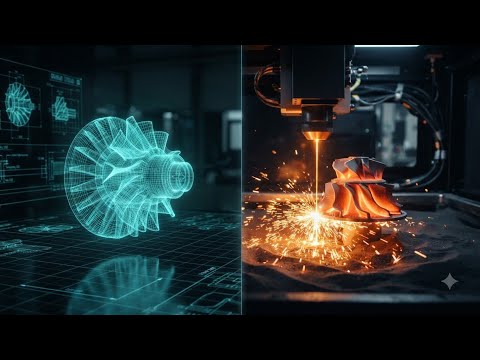
In today's fast-paced industrial landscape, the journey from a spark of an idea to a tangible product is a feat of modern technological synergy. This seamless transition is powered by the evolution of digital manufacturing tools that have redefined how we conceive and create. At the heart of this revolution lies Engineering CAD, the sophisticated software that allows designers to build, test, and refine blueprints in a virtual environment before a single atom of material is moved.
The Digital Blueprint: Where Innovation Begins
The process begins with Computer-Aided Design. Gone are the days of manual drafting tables; modern Engineering CAD provides a high-fidelity, multi-dimensional workspace where every measurement is precise and every mechanical constraint is calculated. This digital blueprint serves as more than just a visual guide—it is a comprehensive data set that defines the geometry, material properties, and functional limits of a component. By utilizing these advanced tools, engineers can simulate real-world stresses and thermal dynamics, ensuring the final product is optimized for peak performance.
Bridging the Gap: The Role of CAM
Once the digital model is perfected, the next critical step is Computer-Aided Manufacturing (CAM). CAM acts as the essential bridge between the virtual world and the factory floor. It takes the complex data from your Engineering CAD file and translates it into G-code—the specialized language that tells CNC machines or 3D printers exactly how to move, cut, or extrude. This automated workflow minimizes human error and significantly accelerates the production cycle, enabling rapid prototyping and the creation of complex geometries that were once deemed impossible.
Physical Reality: The Power of 3D Printing
The final stage of the journey is the physical realization of the object. While subtractive manufacturing remains vital, additive manufacturing (3D printing) has revolutionized the industry by allowing for unprecedented design freedom. Whether you are creating a custom medical implant or a lightweight aerospace bracket, the transition from software to hardware is now faster than ever. By mastering the integrated workflow of CAD, CAM, and 3D printing, creators can push the boundaries of innovation, turning visionary digital concepts into high-quality physical realities.
