
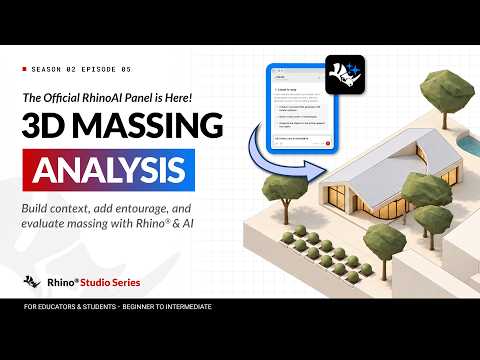
In the rapidly evolving world of architectural design, the ability to visualize and compare multiple design iterations quickly is a superpower. Whether you are a student or a seasoned professional, mastering massing studies is essential for understanding how a building interacts with its environment. By leveraging the power of Rhino 3D alongside cutting-edge AI tools, designers can now transform abstract concepts into data-driven spatial analyses faster than ever before.
Contextualizing Your Design on a Real Site
The first step in any successful massing analysis is grounding your project in reality. It is no longer enough to design in a vacuum; you must see how your structure sits on a real-world site. By importing site data into your workspace, you can evaluate three distinct massing options simultaneously. This process allows you to see how different volumes affect sunlight, shadows, and the overall urban fabric. Utilizing Rhino 3D for this stage ensures that your geometry is precise and ready for further refinement or environmental testing.
Bringing the Scene to Life with Entourage
A massing model can often feel cold and disconnected. To truly understand the scale and "feel" of a space, adding life—such as trees and people—is crucial. Incorporating these elements into your site plan helps stakeholders visualize the human experience within the design. This stage isn't just about aesthetics; it’s about scale. Seeing a human figure next to a massive glass facade immediately provides a sense of proportion that a simple box cannot convey.
Data-Driven Comparisons Using AI
One of the most powerful features of a modern architectural workflow is the ability to compare multiple options from the exact same perspective. By setting up three consistent camera views, you can swap between design iterations to see which one performs best visually and functionally. When you integrate AI into this phase, you can enhance these views with realistic textures and lighting, providing a glimpse into the future of the project.
Conclusion
Embracing a digital-first approach to massing analysis allows for smarter decision-making and more compelling presentations. By mastering the tools within Rhino 3D and staying ahead of the curve with AI integration, you can ensure that your architectural designs are not only beautiful but also perfectly suited for their real-world context. Stop guessing and start analyzing—your next project deserves that level of precision.
