
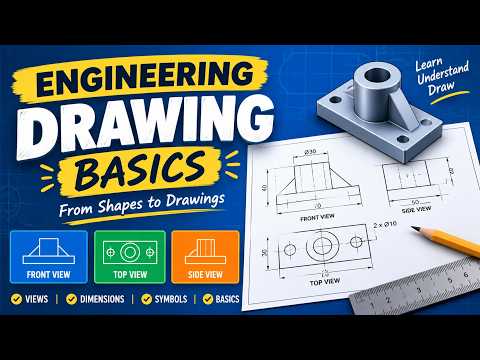
In the world of manufacturing and construction, clear communication is the foundation of every successful project. Before a single bolt is turned or a part is 3D printed, a concept must be translated into a technical format that anyone in the industry can understand. This is where Engineering Drawing comes into play. Often referred to as the "universal language of engineers," it provides the precise technical specifications needed to turn an abstract idea into a physical reality.
The Power of Orthographic Projections
One of the core pillars of any technical blueprint is the use of orthographic views. Unlike a standard 3D sketch, which can often distort the scale of an object, orthographic projection represents a three-dimensional object using several two-dimensional views. By analyzing the front, top, and side profiles, a manufacturer can understand the exact shape and proportions of a component with mathematical certainty. Mastering these views is the first step for any student or professional looking to excel in mechanical design.
Precision Through Dimensions and Symbols
A sketch becomes a professional Engineering Drawing when it incorporates standardized dimensions and geometric symbols. These elements are not just decorations; they are critical instructions. Dimensions tell the machinist exactly how large a part should be, while symbols communicate information about surface finish, tolerances, and material requirements. For a Quality Assurance (QA) specialist, these symbols are the "rulebook" used to determine if a finished part meets the necessary safety and functional standards.
Why It Matters for Your Career
Whether you are an aspiring Design Engineer or working in quality control, proficiency in Engineering Drawing is a non-negotiable skill. It ensures that the original design intent is preserved from the initial brainstorming phase all the way to final inspection. By understanding how to read and create these documents, you bridge the gap between creative design and practical production, reducing errors and saving time on the factory floor.
In conclusion, learning the basics of technical drafting is more than just a classroom exercise—it is an essential tool for anyone serious about a career in the mechanical and industrial sectors. By focusing on orthographic views and standardized symbols, you set yourself up for success in the evolving world of modern engineering.
