
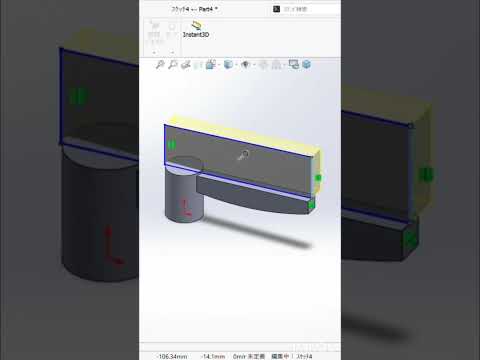
In the rapidly evolving world of industrial design, the ability to transform a conceptual sketch into a functional mechanical component is a vital skill. For many engineers and designers, the journey toward mastery is paved with consistent practice and the right tools. As we reach "Day 49" of our design challenge, we shift our focus toward the intricate details of machine part modeling, showcasing why SolidWorks remains the gold standard for professionals worldwide.
The Power of Precision with 3D CAD
Modern engineering demands more than just aesthetic appeal; it requires mathematical precision and structural integrity. Using 3D CAD software allows designers to simulate real-world conditions, test tolerances, and visualize complex assemblies before a single piece of hardware is ever manufactured. This digital-first approach significantly reduces production costs and accelerates the time-to-market for new machinery.
In today’s project, we explore the nuances of parametric modeling. By defining specific constraints and relationships between different geometric features, we create a robust model that can be easily updated or modified. Whether you are designing a simple bracket or a complex engine component, mastering these 3D CAD techniques ensures that your designs are both scalable and accurate.
Progressing Through the Day 49 Milestone
Reaching the halfway point of a 100-day challenge is a significant milestone. At this stage, the focus shifts from basic sketching to advanced features such as swept bosses, lofted cuts, and complex fillets. The "Day 49" model highlights the intersection of form and function, focusing on a machine part that requires specific load-bearing properties.
As you navigate through the SolidWorks interface, you begin to realize that the software is not just a drawing tool—it is an extension of the engineer's mind. Every extrude and revolve operation is a step toward solving a mechanical puzzle. For those looking to transition from a hobbyist to a professional level, consistently practicing with 3D CAD is the most effective way to build the muscle memory required for high-speed, high-accuracy modeling.
Conclusion: Elevate Your Design Workflow
The journey of a thousand models begins with a single sketch. By committing to a daily practice routine, you not only learn the software but also develop a deeper understanding of mechanical geometry. As we continue to push the boundaries of what is possible in the digital workspace, staying updated with the latest tools and techniques is essential for any aspiring designer.
Stay tuned as we continue this journey toward day 100, refining our skills and unlocking the full potential of industrial-grade modeling software.
