
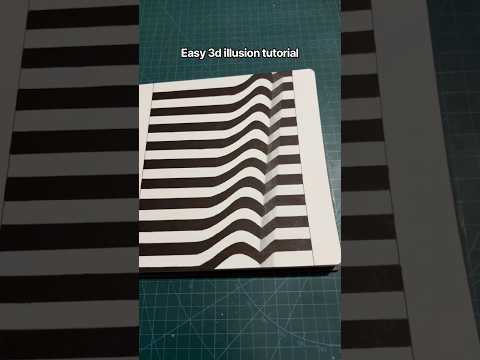
Have you ever stared at a drawing and felt like you could reach right into the page? That is the magic of optical illusions. By using clever lines, geometric patterns, and strategic shading, any artist can transform a flat, two-dimensional surface into a convincing 3D space. Whether you are a seasoned illustrator or a beginner looking for a fun weekend project, mastering the art of 3D illusions is a rewarding way to level up your drawing skills.
The Foundation of Optical Art
The secret to a successful 3D illusion lies in the mathematical precision of geometric art. Unlike traditional sketching, where you might focus on soft curves and organic shapes, 3D illusions rely on perspective. By manipulating lines and angles, you trick the human brain into perceiving depth and volume where none actually exist. This technique allows you to define a 3D space that feels immersive and tangible, even on a standard sheet of paper.
Step-by-Step: Building Your Illusion
To start your journey into the world of optical art, follow these simple phases:
- Establish Your Perspective: Begin by drawing light guidelines. Most illusions use a central vanishing point or a series of parallel lines that suggest a hallway or a deep pit.
- Define the Geometry: Use a ruler to ensure your lines are crisp. Create repeating shapes—such as squares or triangles—that gradually change in size as they move toward your focal point. This creates the immediate sensation of distance.
- Construct the Depth: Connect the corners of your shapes with diagonal lines. This is the critical moment where your drawing begins to transition from a flat pattern into a structured 3D space.
Mastering Contrast and Shading
The final "wow" factor of any 3D drawing comes from high-contrast shading. Most iconic optical illusions utilize a monochrome palette of black and white. By filling in alternating sections with deep black ink, you create a sense of shadow and light.
The areas you leave white will appear to "pop" toward the viewer, while the dark, shaded areas appear to recede into the distance. This push-and-pull effect is what makes the illusion come alive. Don't be afraid to experiment with gradients to make the transitions look even smoother.
Conclusion
Creating 3D art is more than just a drawing exercise; it’s a lesson in how we perceive the world around us. With a bit of patience and practice, you can turn any blank page into a mind-bending masterpiece. Grab your markers and start exploring the infinite possibilities of depth today!
