
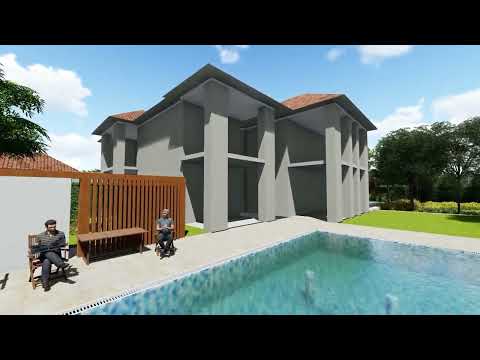
In the world of modern landscape architecture, the transition from a conceptual sketch to a tangible reality is a journey defined by precision and vision. Gone are the days when clients had to rely solely on flat 2D blueprints to imagine their future gardens, parks, or urban spaces. Today, the integration of advanced 3D software has revolutionized how we perceive and execute outdoor design.
The Heart of Modern Landscape Design
Landscape architecture is a complex blend of environmental science and artistic expression. While site analysis and plant selection are foundational, the most critical phase of the modern workflow is the 3D modeling stage. This phase allows designers to bridge the gap between abstract ideas and physical space. By building a digital twin of the environment, architects can test terrain elevations, shadow patterns, and the placement of hardscape elements long before a single shovel hits the ground.
Visualizing the Future with Lumion
Among the various tools available to professionals, Lumion has emerged as a powerhouse for rendering high-end landscape environments. Using specialized 3D software like Lumion enables designers to breathe life into their models. You aren’t just looking at a static house or a blocky tree; you are viewing a living ecosystem. You can see how the wind moves through the leaves, how water reflects the afternoon sun, and how the materials will age over time. This level of realism is essential for making informed decisions about materials and spatial flow.
Why the 3D Video Phase Matters Most
As noted by industry experts, the 3D video phase is arguably the most important part of the landscape design process. A static image is helpful, but a cinematic walkthrough provides context and scale that nothing else can match. It tells a story. It allows the client to "walk" through their future sanctuary, experiencing the transition from a patio to a pool area or a woodland path.
This immersive experience serves two purposes: it acts as a powerful communication tool for stakeholders and functions as a final safety net for the designer to catch any spatial inconsistencies. By investing time in high-quality 3D software output, landscape architects ensure that the final result is not just a beautiful design, but a functional masterpiece that exceeds expectations.
Whether you are a professional architect or a property owner planning a renovation, understanding the power of 3D visualization is the first step toward a successful landscape transformation.
